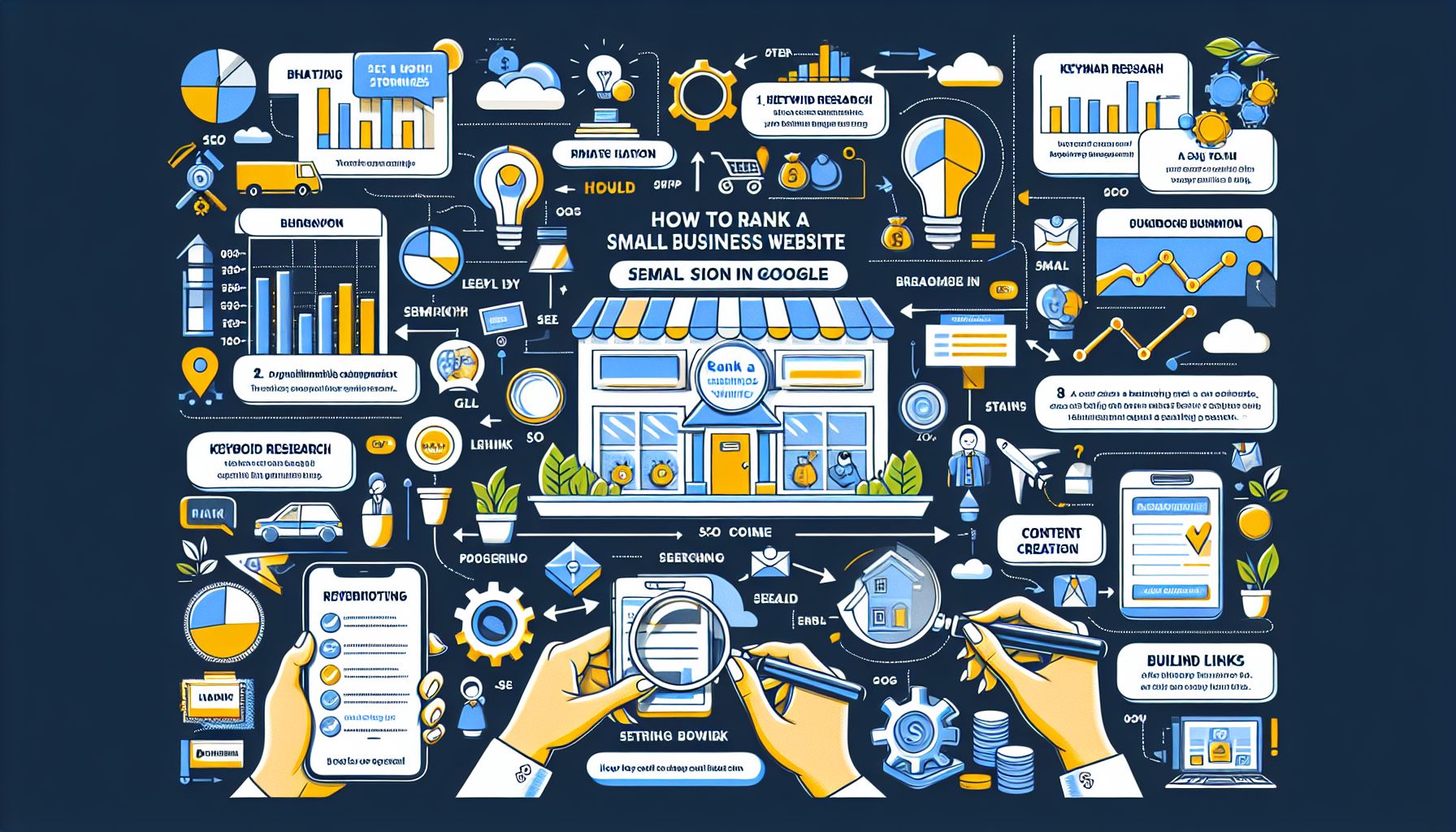
How to Rank Your Small Business Website in Google: A Comprehensive Guide
For many small business owners, appearing in Google’s search results can be a game-changer. Google is the place where consumers go to find solutions to their problems — so it makes sense that you’d want your business to be a part of that conversation. Being on the first page of Google not only increases the visibility of your brand but also makes it easier for potential customers to find your services or products. Irrespective of your niche, understanding the fundamentals of Google rankings and SEO (Search Engine Optimization) can prove to be crucial for your brand’s online presence.
Understanding Google’s Search Algorithm
At the heart of Google’s search capacity is its sophisticated and ever-evolving algorithm, designed to provide the best possible search results for its users. This algorithm uses over 200 factors to rank websites including domain-level factors, on-page factors, off-page factors, site-level factors, etc. Understanding these factors might seem overwhelming, but don’t worry; ranking high on Google doesn’t require knowledge of all these parameters. A strong focus on relevance, quality content, and a user-friendly website could put you in a good position.
Quality Content is King
Quality content creation is an important part of Google ranking. By laying out a clear and engaging message about who you are, what you do and how you serve your customers, you can make a compelling case to both Google and your potential customers. Quality content should answer questions, provide solutions, and demonstrate an in-depth knowledge of your field of business. With the right keywords and the relevance of the content, your website stands a higher chance of being noticed by Google.
Harnessing the Power of Keywords
Keywords are the terms or phrases that users type into Google when they are searching for services, products, or answers. Incorporating these words and phrases into your website, in a natural and reader-friendly manner, is a key SEO strategy. Start by identifying the specific words or phrases your potential customers might use to find the product or service you offer. Use keyword research tools like Google Keyword Planner, SEMRush, or Ahrefs to get a list of keyword ideas.
Importance of Mobile-Friendly Website Design
With the vast majority of Google users browsing the web on their mobile devices, having a mobile-friendly website has never been more important. Google’s mobile-first index means that Google predominantly uses the mobile version of the content for indexing and ranking. Hence, if your site isn’t mobile-friendly, it’s likely to suffer in Google’s rankings.
Building Backlinks and Local SEO
Backlinks — that is, other reputable sites linking back to your website — are a significant ranking factor. You can earn backlinks by creating unique, useful content that others want to link to. Use social media to share your content widely, increasing the chance that others will link to it.
Businesses serving a local market should not overlook the power of local SEO. By optimising your site for local search, you can fight off larger competitors and seize important online real estate on the first page of Google. Begin by ensuring your business details are consistent and correct across all online platforms and directories, starting with Google My Business.
Making the Most of Meta Descriptions and Alt Tags
Meta descriptions and alt tags are both crucial components of a site’s SEO. A meta description is the small section of text that appears below your page title on a SERP (Search Engine Results Page). Alt tags, or alternative text descriptions, are used to describe the images on your site. Both these elements provide another chance to include your target keyword and communicate with Google what your page is all about.
In conclusion, becoming an expert at Google SEO doesn’t happen overnight. It’s an ongoing process of development and tuning. However, with the right approach, small business owners can definitely improve their website ranking on Google. Remember, the journey is not just about increasing your visibility on Google, but also about creating a better user experience and building a stronger relationship with your customers.